
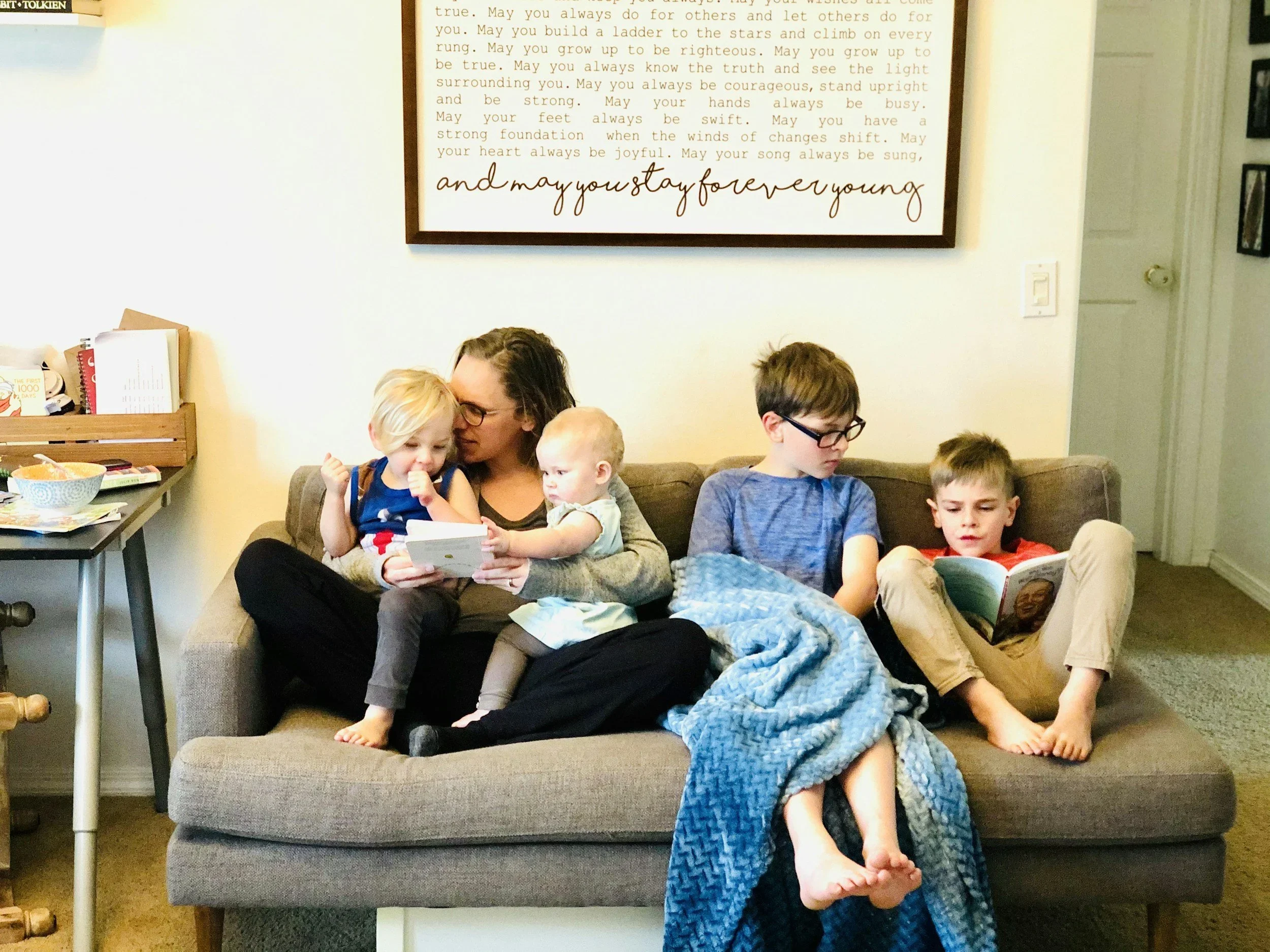
When Motherhood Feels Like Too Much: How Accelerated Resolution Therapy Can Help You Reset
Nighttime is the hardest for me. When the bedtime routine doesn’t go as planned and my brain and body have been managing to hold it together all day, but now there is little left. When we only had one child, we could switch off more. Turn off the noise for a little while or tap out of bedtime when we needed it. But when that second and third child (for me it is only two!) come with their own bedtime struggles, the noise and overwhelm feels especially intense. That feeling when your brain and body have hit their limit and the sounds of one more whine or call from the room feel like they might send you over the edge. And then there is the guilt for losing it afterwards. It’s a lot to hold. If you're a mom who has ever thought I don't want to be this reactive, you are not alone. And there is help that actually works.
This post is about a therapy approach called Accelerated Resolution Therapy (ART). What it is, why it works, and how it can specifically help moms who are overwhelmed, overstimulated, and ready to show up differently for themselves and their families. I'm a therapist based in Arlington, Virginia, and I work with moms across Northern Virginia and the DC area who are navigating exactly this.
Nighttime is the hardest for me. When the bedtime routine doesn’t go as planned and my brain and body have been managing to hold it together all day, but now there is little left. When we only had one child, we could switch off more. Turn off the noise for a little while or tap out of bedtime when we needed it. But when that second and third child (for me it is only two!) come with their own bedtime struggles, the noise and overwhelm feels especially intense. That feeling when your brain and body have hit their limit and the sounds of one more whine or call from the room feel like they might send you over the edge. And then there is the guilt for losing it afterwards. It’s a lot to hold. If you're a mom who has ever thought I don't want to be this reactive, you are not alone.
This post is about a therapy approach called Accelerated Resolution Therapy (ART). What it is, why it works, and how it can specifically help moms who are overwhelmed, overstimulated, and ready to show up differently for themselves and their families. I'm a therapist based in Arlington, Virginia, and I work with moms across Northern Virginia and the DC area who are navigating exactly this.
The Weight of Everyday Motherhood and Mom Rage
In my practice, I see many moms who are struggling with the day-to-day. It isn't necessarily postpartum depression, though moms experiencing anxiety or depression often also feel very on edge and irritable. It can also be the slow accumulation of being needed by everyone, all the time. The noise, the interruptions, the mental load. It all stacks on top of each other until your nervous system is so dysregulated that the tiniest thing sets you off.
On social media we often hear this called “mom rage” and it can look like:
Dreading the witching hour before dinner, knowing the chaos is coming and feeling powerless to meet it with any calm
Snapping at a child over something small and then spiraling into shame and guilt
Feeling like you are always one request away from completely losing it
Replaying arguments, accidents, or stressful moments in your mind long after they're over
This isn't because you're a bad mom. It's a nervous system that has been in overdrive and is reacting. I often say that when we're experiencing rage as a mom, it is an important piece of information. It means the brain's threat-detection system normally designed to protect you is on alert. And it tells us that we are missing some crucial pieces in being able to take care of ourselves and our own needs.
Traditional talk therapy can help you understand why you feel this way. But understanding something cognitively doesn't always change how your body responds in the moment. That's where Accelerated Resolution Therapy offers something different.
Why Accelerated Resolution Therapy Works When Other Approaches Don't
As a therapist, I've watched clients spend months and sometimes years developing insight into their patterns and still find themselves reacting in ways they don't want to. Often clients come to me with incredible insight into what might be leading them to feel the way they do, or things in their childhood that may be at the root of how they are feeling. This is such an important piece of the puzzle. But understanding the root of a behavior and actually changing it are two very different things. Accelerated Resolution Therapy bridges that gap.
ART is an evidence-based treatment that uses guided eye movements similar to those used in EMDR combined with specific imagery techniques to help the brain reprocess distressing memories and experiences. The eye movements are similar to how your eyes move during REM sleep, the time your body is best at processing. The problem is, your dreams free associate. They don't necessarily target the things you most need to process from your day to reduce the sensations that might get stuck.
I also often use tappers in my practice. These are handheld devices that deliver bilateral stimulation through gentle vibrations while you hold one in each hand. Most clients find them very relaxing, and you are able to close your eyes during processing. Like eye movements, tappers engage both hemispheres of the brain, promoting communication and integration between them. ART was developed by Laney Rosenzweig and has a growing research base, originally built around trauma, PTSD, anxiety, and depression.
Here's what makes it particularly powerful for moms dealing with rage and overwhelm: ART works at the level of the nervous system, not just the thinking mind. When we experience something stressful, even something that seems small (like being screamed at by three kids simultaneously) the brain encodes that experience along with all the sensory and emotional data that came with it. Over time, repeated stressors create ingrained neural pathways that trigger automatic reactions: the sharp tone, the shutdown, the mom rage and overwhelm that seems to come out of nowhere.
ART uses bilateral stimulation to interrupt these patterns while you hold an image or scenario in mind. This allows the brain to reprocess the experience. You keep the factual memory, but strip away the emotional charge. Clients frequently describe it as feeling like the memory still exists, but it no longer grabs them the way it did before.
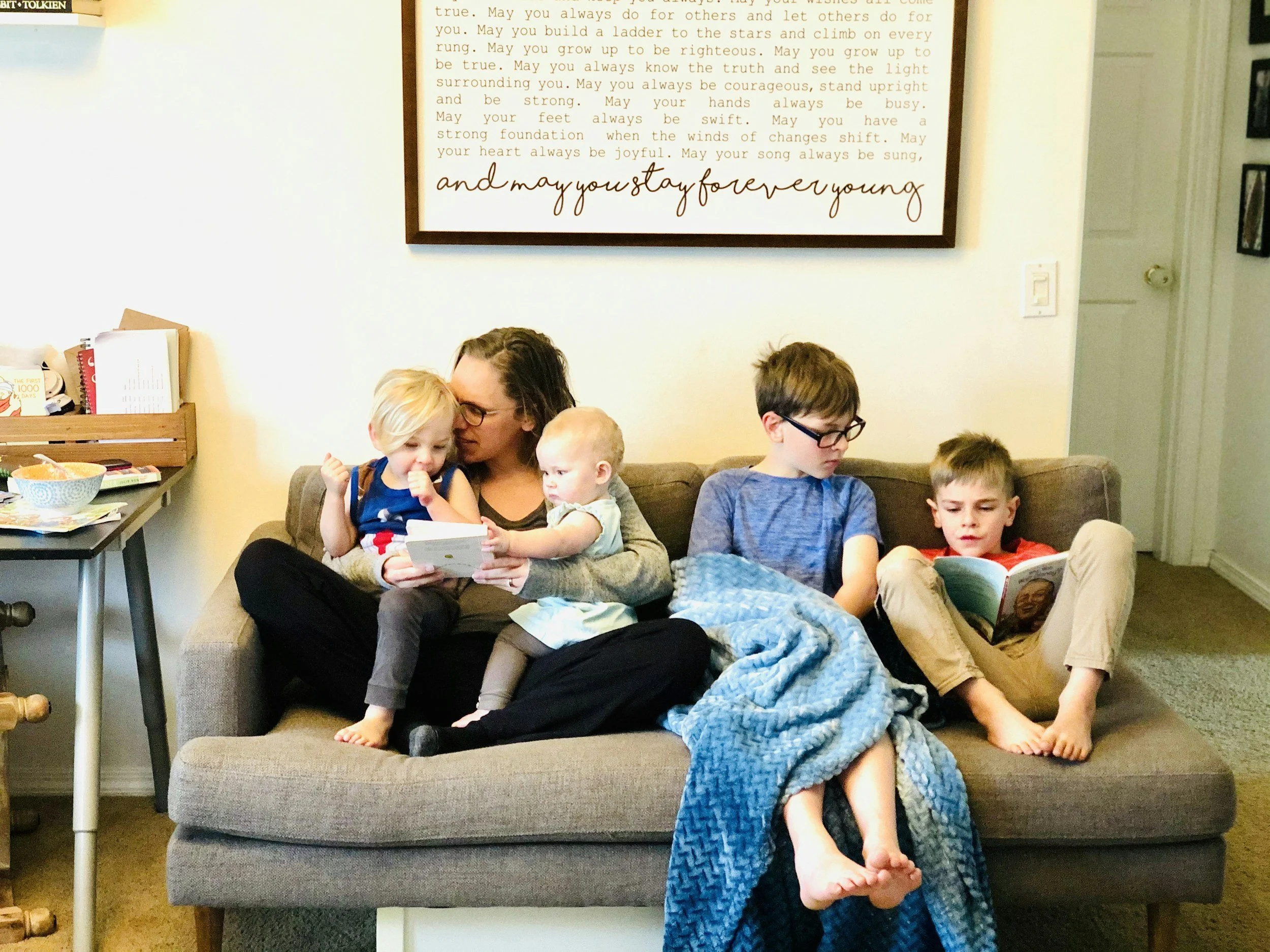
A mom managing the day-to-day.
How ART Helps Moms Rewrite Their Typical Day
So let’s talk about how this looks for a mom who isn't processing a single traumatic event, but rather the cumulative stress of everyday family life. This is where one of ART's Typical Day protocol can be so helpful.
Rather than targeting a specific traumatic memory, the Typical Day script walks you through your ordinary day from waking up to bedtime using eye movements to help your nervous system rehearse a calmer, more grounded version of yourself.
In session this might look like identifying the moments in your day that feel most charged. Maybe it's the morning rush when the kids are refusing to do the basic tasks you need to get out the door. Maybe it's the late afternoon when you're exhausted from work and the kids are tired from daycare and school. Maybe it's the moment a child ignores you for the fourth time and you feel your chest getting tight.
Using eye movements or the gently vibrating tappers, you first process the distress connected to those moments, letting the nervous system and brain process these difficult moments. Then you use imagery to replace that scene with how you want to respond. You literally picture yourself in those same moments: regulated, patient, present. And you hold that image while continuing the eye movements.
But it isn’t just wishful thinking or visualization. The eye movements help the brain encode the new imagery more deeply, essentially rehearsing a different neural response so it becomes more accessible in real life. Clients often describe walking out of session feeling like they can actually picture being the mom they want to be. Not as an abstract ideal, but as something that feels within reach.
One client came in describing her afternoons as a "pressure cooker." After a combination of talk therapy and ART sessions using the Typical Day protocol, she told me she felt like she could pause now before reacting. Afternoons aren’t perfect, but she is able to handle it.
That tiny pause between stimulus and response makes such a difference. If you're curious about whether ART might be a fit for you, you can also explore the published research on ART and stress for a deeper look at the evidence base.
Ready To Feel Like Yourself Again?
You don't have to keep bracing for the hard moments. Your nervous system can learn something new, and you can feel better.
At Connected Beginnings, I'm an Arlington, Virginia-based therapist working with moms across Virginia and Washington, DC who are exhausted by their own reactivity and ready for something that actually moves the needle. I offer both in-person and virtual sessions, so wherever you are in the DC area, support is accessible. If you're curious about whether Accelerated Resolution Therapy is a good fit for you, I'd love to connect.

My Child Is Feeling Anxious. Should I Be Reassuring Them or Pushing Them Through It?
For us, it started small, my son sticking close at birthday parties, clinging to my hand instead of running off with his cousins like he used to. Then came the playdates he didn’t want to go to, and the days he’d refuse to stay at his grandparents unless I was right there. Suddenly, things that were once easy became decisions: Do I push him to go, or do I let him stay back?
If you’re living this, you know the scenes. Your child frozen at the bottom of the stairs, begging you not to make them go up alone. The school drop-off where they won’t let go. Or it’s late at night, you’re tired, and they won’t sleep unless you’re glued to the edge of their bed. Every time, I’d find myself wondering: comfort him, or push him through? Honestly, I still don’t always know.
And this is the question I hear from almost every parent of an anxious child. It's hard because both instincts come from love. This post is for parents caught in that push-pull, who want to understand what's actually keeping their child's anxiety going and what the research says about finding a better way through.
Most parents have experienced the moment of uncertainty that happens when your child becomes nervous about something you know they can do. Maybe it is new to them, so you understand why they are feeling scared. And while you believe in them, they are clinging to you, crying and begging you to not make them do what you’ve come there for.
For my son, swim lessons was one of these moments. My oldest son had jumped in the water and swam off without a care when he started lessons a few years prior, but my youngest found the whole situation intimidating. This isn’t meant to compare children, but instead to say that children have different personalities and respond to situations in all sorts of ways. My older son has other situations that are hard for him that my younger floats right through.
If you have a child that tends to be slower to warm in new situations, feels nervous during transitions, with new people, or seeks a lot of reassurance, you have probably experienced this. I found myself standing at the side of the pool with an expectant teenager waiting for me to solve the conundrum of how much do I comfort him and how much do I push him?
This post is for parents caught in that push-pull. Who want to feel confident responding when their child comes to them with fears and want to know what the research says about how much to push our kids.
Why Reassuring an Anxious Child Can Sometimes Backfire
It can be exhausting trying to figure out the “right” response when your child feels nervous. Often these moments are very public and your parenting feels on display. Our response is usually swayed by our mood that day, time pressure, past experiences, and so many things. That is to say, its usually not very consistent. We swing across the ends of the pendulum depending on the day and issue. Sometimes we push, “you can do this, just go!!” Other times, we spend a lot of time comforting and end up skipping the thing that was worrying them.
The first thing to know is that your child’s response to feeling nervous is incredibly normal. Think of any baby mammal that gets surprised or scared, they will run back to their parent’s side for comfort. And of course, this makes your natural response normal as well. We are wired to want to lower our child’s distress. To want to make them feel less worried, less sad, to tell them that it is all going to be ok. Or sometimes we even want to say, “you don’t have to do this if you don’t want to” so the feelings for them will stop. And sometimes, if it truly isn’t something they need to do, that is an ok answer.
But the important thing to know is that while reassuring our child or removing them from what is making them upset sometimes provides short-term relief, it usually doesn’t help long-term. In fact, the tricky thing about anxiety is that it feeds off avoidance. The more we avoid something, the more our anxious brain says “oh yes, it was true I needed to worry about that! I should continue to avoid it!” The more we help our child avoid the things they are worried about, the more we confirm for their brain that they are indeed correct, they aren’t capable of that.
But "just pushing through it" doesn't usually work either. Remember the pendulum I mentioned? Knowing that avoidance makes anxiety worse, we might be tempted to go to the other side of the pendulum and demand a child jump in the pool right away. Without the right support and framing, demands can feel overwhelming to an anxious child rather than empowering. It can spike distress without building any new skills. And the meltdowns that follow often send parents straight back to reassurance and the cycle continues.

Mother reassuring child.
The Middle Path: Evidence-Based Strategies for Parenting an Anxious Child
If reassuring or letting them skip the activity may not work long term, but pushing right out the gate doesn’t either, what are we left with? Research points clearly to a middle path. Instead of feeling like you are always swinging along the pendulum based on your mood, plan to be right in the middle. The middle path looks like this:
Express empathy + confidence instead of giving reassurance. Instead of "Its going to be really fun! Remember you always have fun once you get started" or “you’re okay sweetie, mommy is here. Ms. Sarah is really nice!!!” try "I know this feels hard, and I know you can handle it." “I know you’re feeling nervous sweetie, you got this.” You're not dismissing the fear, you're communicating belief in your child's ability to cope.
Don’t try to fix it. After you’ve validated their feeling and told them confidently you know they can do it, stay present with how they are feeling, nod, listen, accept how they feel. Picture yourself making a physical shrug. Not in a dismissive way, just in the sense that your child is having feelings, its human. It will pass. You’re giving them confidence that they can handle the ups and downs of life and that feelings come and go.
Expressing empathy AND confidence is called a supportive statement. It is a middle path you can take when your child is feeling nervous about something. You remain confident that it isn’t your job to fix the feelings your child is having, it is your job to be present and empathic as they get through them. The more times they get through to the other side, the more times they will realize they CAN do it! When you aren’t sure what to do or say, grab your supportive statement (empathy/validation + confidence) and then listen, don’t solve.
You Don't Have to Figure This Out Alone
If you're reading this thinking "we've tried all of this and it's still not working,” or your child’s nervous feelings seem like they are getting worse, that's when it's worth getting support.
I work with parents of anxious children using SPACE (Supportive Parenting for Anxious Childhood Emotions), a research-based program developed at Yale that focuses entirely on the parent rather than the child. It gives you a clear, structured roadmap for reducing accommodation and responding to anxiety in a way that builds your child's resilience rather than maintaining the cycle. Many families see meaningful change within the first few weeks.
At Connected Beginnings, SPACE is offered online for families in Virginia and Washington, DC. If you'd like to learn more, a free 20-minute intro call is a good place to start.

Is My Child's Worry Normal? What Parents of Anxious Kids Need to Hear
Every parent knows that creeping feeling and the questions that start quietly in the back of your mind. Is this normal? Do other kids do this? When my youngest started worrying about separating from us far beyond the typical toddler years, those questions came in for me too. You might know that some separation anxiety is normal, so how do you figure out where the line is?
This post is for parents who are in that uncertain middle ground where your child's worries feel like more than a phase, but you're not sure what to do next. We'll look at what childhood anxiety actually looks like at home, why your well-meaning responses might be keeping the cycle going, and what the research says actually helps anxious children build confidence and resilience.
Every parent knows that creeping feeling and the questions that start quietly in the back of your mind. Is this normal? Do other kids do this? When my youngest started worrying about separating from us far beyond the typical toddler years, those questions came in for me, too. You might know that some separation anxiety is normal, so how do you figure out where the line is?
This post is for parents who are in that uncertain middle ground where your child's worries feel like more than a phase, but you're not sure what to do next. We'll look at what childhood anxiety actually looks like at home, why your well-meaning responses might be keeping the cycle going, and what the research says actually helps anxious children build confidence and resilience.

Child and parents playing.
When Childhood Worry Becomes Something More: Understanding Childhood Anxiety in Kids
Most children experience fear and anxiety sometimes. It's a normal, healthy part of growing up. Worries about storms, the dark, making friends, or getting something wrong at school are developmentally typical. Kids are constantly encountering a world that feels new and big.
But for some children, worry isn't just a passing phase. It shows up most days. It shapes what they'll try, where they'll go, and how much they can enjoy being a kid. When childhood anxiety starts to shrink your child's world, that's worth paying attention to.
So what does anxiety in children actually look like beyond the obvious? It might be a child who needs constant reassurance before school. It might be stomach aches every Sunday night, meltdowns at birthday parties, or a refusal to sleep alone that's persisted for years. Anxious children often avoid the things that bring on their worries and the more they avoid, the bigger those worries grow.
For parents, this is both exhausting and confusing. You reassure them like any caring parent would. You try to stay close in new situations, help them feel comfortable, ease them in slowly. But it feels like the worries keep getting bigger. You find yourself wondering: Am I handling this right? Am I actually making this worse?
It’s worth thinking about, but not because you’re doing something wrong. Understanding how childhood anxiety works is the first step towards helping your child move through it.
The Impossible Tightrope: A Therapist's Perspective on Parenting an Anxious Child
Here's something I want parents to hear clearly: parenting a child with a lot of worries is genuinely hard. And one of the hardest parts is that what feels most loving in the moment isn't always the most helpful thing in the long run.
When your child is upset, every instinct you have screams make it stop. So you stay a little longer at drop-off. You check under the bed one more time, or spray the magic potion over the bedspread. You skip the event that felt too overwhelming and make a quiet plan to try again another day. You answer the same reassuring question, "but what if you aren't there?" for what feels like the hundredth time.
None of this makes you a bad parent. It makes you a caring one.
But research on parental accommodation shows that these responses can quietly reinforce anxiety over time. Parental accommodation is the way parents adjust their behavior to reduce a child's anxiety in the moment. Like waiting outside the bathroom door or checking their homework four times each night. Often these help in the short-term. But when children avoid their worries, their brain clocks it as confirmation that it was right. "See! This IS something I should be worried about!" They don't get the chance to learn what they're capable of. The worry stays in charge.
The tension you feel between protecting your child from distress and wanting them to grow into a confident, independent person is real. You may find yourself on a pendulum that swings between helping a lot and pushing them beyond their comfort, depending on your mood that day. We've all been there.
This isn't a character flaw. It's what happens when loving parents are doing their best without a clear roadmap.
What Actually Helps Anxious Children: Strategies Rooted in Research
The good news is that parents are extraordinarily powerful when it comes to childhood anxiety. Not because you caused it, but because as your child's closest attachment figure, you're perfectly positioned to help change it.
A growing body of research shows that how parents respond to a child's anxiety can make a big difference, sometimes even more than working directly with the child. When parents learn specific, evidence-based ways to show up for their anxious kid with both empathy and confidence, children's anxiety genuinely decreases.
Here are a couple evidence-based principles to start with:
Validate the feeling without validating the fear. Instead of "There's nothing to worry about," try "I can see this feels really scary. I also know you can handle it." This communicates belief in your child without amplifying the threat.
Reduce reassurance-seeking gradually. Constant reassurance feels helpful but functions like a temporary fix — it relieves anxiety in the moment without building any tolerance. Gently reducing how often and how much you reassure gives your child room to sit with uncertainty and discover they can survive it.
One parent I worked with described the shift this way: she stopped trying to convince her son the activities he was avoiding were going to be fun and reassure him she wouldn’t leave, and started gently saying, “I know you’re feeling nervous about the birthday party, and I know you can do it.” And then listening and nodding to validate from there. Within weeks, her son needed less reassurance and was trying activities he hadn’t attempted before.
There's Support Designed Specifically for This
If this resonates, you might be a good fit for SPACE (Supportive Parenting for Anxious Childhood Emotions), an evidence-based parent training program developed at the Yale Child Study Center. SPACE is designed for parents who are doing their best and want practical tools for navigating their child's anxiety without constantly second-guessing themselves. Sessions are parent-focused, which means your child doesn't have to be ready or willing to attend therapy for you to start seeing real change at home.
At Connected Beginnings, SPACE is offered online for families in Virginia and Washington, DC. Sessions run 10–12 weeks and are built around real, workable strategies, not vague advice.
If you've been wondering whether your child's worries are something more, a free 20-minute intro call is a good place to start.
Is This Postpartum Anxiety? What It Actually Feels Like (And What To Do About It)
It's 2am. Your baby is finally asleep. You should be too. You're exhausted in a way you didn't know was possible. But instead you find yourself checking every few minutes to make sure your baby is still breathing, thoughts racing, unable to quiet your mind. In the morning you spend the precious minutes you could be getting a coffee for yourself tracking poops, pees, and wake windows. You thought the hard part would be the exhaustion. You didn't expect to feel so out of control.
If this sounds familiar, you might be experiencing postpartum anxiety and you're far from alone. This post is for new moms in that uncertain place where something feels off but you're not sure if what you're feeling is normal new parent worry or something worth paying attention to. We'll look at what postpartum anxiety actually looks like, why it so often goes unrecognized, and what genuinely helps.
It's 2am. Your baby is finally asleep. You should be too. You're exhausted in a way you didn't know was possible. But instead you find yourself checking every few minutes to make sure your baby is still breathing, thoughts racing, unable to quiet your mind. In the morning you spend the precious minutes you could be getting a coffee for yourself tracking poops, pees, and wake windows. You thought the hard part would be the exhaustion. You didn't expect to feel so out of control.
If this sounds familiar, you might be experiencing postpartum anxiety and you're far from alone. This post is for new moms in that uncertain place where something feels off but you're not sure if what you're feeling is normal new parent worry or something worth paying attention to. We'll look at what postpartum anxiety actually looks like, why it so often goes unrecognized, and what genuinely helps.
When New Mom Worry Becomes Something More: Understanding Postpartum Anxiety
When most people think about postpartum mental health, they think about postpartum depression. But postpartum anxiety is actually more common and it often goes unrecognized by doctors, partners, and the moms experiencing it themselves.
Postpartum anxiety is excessive worry that sticks around and makes it harder to fully enjoy the early months of motherhood. It often develops in the first weeks or months after birth but can emerge anytime in the first year. It can look like hypervigilance, constant alertness, and a low-level hum of fear that something bad is about to happen. Sometimes it can look like irritability when things start to feel out of control.
So what does postpartum anxiety actually look like beyond the obvious? It might be a mom who can't sleep even when the baby sleeps, her body exhausted while her mind keeps spinning. It might be intrusive thoughts about accidents or illness that feel terrifying and shameful to admit. It might be a persistent sense of unease even in calm moments, worries around every feeding, or snapping at your partner and then feeling awful about it. Sometimes it looks like a mom who seems completely on top of everything. Because she is, maybe your brain tells you you always need to stay in control. That’s really hard after a baby when things become so unpredictable.
Some worry after having a baby is completely normal. Everything is new, and feeling unsure is part of that. The difference with postpartum anxiety is the intensity, frequency, and how much it's starting to take over. And you don't have to meet some clinical threshold to deserve support. This is a huge transition, and a safe space to process it matters regardless of how intense things feel. Sometimes I have moms reach out who aren’t sure they have postpartum anxiety, but may just benefit from support during a huge transition that comes with typical worry. That’s okay too!
Mom kissing baby.
It's Not Just Worry: A Therapist's Perspective on Postpartum Anxiety
Here's something I want new moms to hear clearly: postpartum anxiety is not a character flaw, and it's not a sign you're failing at motherhood. It's a clinical condition with a clear name and real, effective treatment. But it's one that gets missed a lot because it doesn't always look the way people expect.
One of the most common questions I hear is: "But isn't some worry just… normal?" Yes, and that's exactly what makes postpartum anxiety so tricky to identify. A few things worth sitting with:
Is the worry proportionate to the actual risk? Checking on your baby once before bed is normal. Checking ten times and still being unable to sleep is worth paying attention to.
Is it interfering with daily life? If anxiety is affecting your sleep, your relationships, your ability to function, or your ability to enjoy time with your baby, that matters.
Does it feel controllable? Normal worry tends to come and go. Postpartum anxiety can feel relentless, like a volume dial you can't turn down.
Has it lasted more than two weeks? Anxiety that persists rather than easing as you settle into a rhythm deserves attention.
Postpartum anxiety also thrives in isolation. It tells you that you're the only one who feels this way, that something is uniquely wrong with you. It can be genuinely healing to have someone reflect back that what you're experiencing has a name, that other moms feel this too, and that it doesn't have to stay this way.
If you're not sure whether what you're experiencing crosses a line, that uncertainty itself is worth exploring with someone.
What Actually Helps Postpartum Anxiety: Strategies Rooted in Research
There are strategies to help if worry or irritability are exhausting you and stealing some of the joy from this time with your baby. You don't have to white-knuckle your way through the first year of your baby's life.
Here are a few evidence-based approaches that genuinely make a difference:
Name what you're experiencing. This sounds simple, but it matters. When anxious thoughts feel like facts, “something is wrong, I'm not doing this right, something bad is going to happen,” being able to say "that's my postpartum anxiety talking" creates just enough distance to respond rather than react.
Challenge the thought, not just the feeling. Cognitive Behavioral Therapy (CBT) helps you identify the thought patterns fueling your worry and gently test whether they hold up. For intrusive or catastrophic thoughts especially, learning to interrupt the spiral is a skill that builds over time with practice.
Let thoughts exist without acting on them. Acceptance and Commitment Therapy (ACT) offers a different approach. Rather than fighting anxious thoughts, you learn to hold them more lightly. The goal isn't to stop worrying; it's to make sure worry isn't running the show.
One mom I worked with came in convinced she was simply "a worrier by nature" and that hypervigilance was just the price of being a good mother. Over the course of a few months she began to recognize when anxiety was driving her behavior versus genuine concern and slowly, the volume on the constant dread turned down.
For more resources, Postpartum Support International has excellent information on postpartum anxiety and how to get support. Postpartum Support VA also has fantastic local resources if you are in Virginia or the DMV.
You Don't Have to Feel This Way
If you're reading this at 2am running through scenarios, this post is for you. You're not broken. You're not a bad mom. Your nervous system is working overtime, and you deserve support not just for your baby's sake, but for yours.
At Connected Beginnings, I work with moms experiencing postpartum anxiety through individual therapy online in Virginia and Washington, DC. If any of this resonated, a free 20-minute intro call is a good place to start. You don't have to have it all figured out before you reach out.
Schedule your free intro call at Connected Beginnings →
If you need help immediately, call 1-833-TLC-MAMA. The National Maternal Mental Health Hotline is free, confidential, and available to help, 24/7.